- Call Us : 9948489333
- Mail Us : office@sujaybiotech.com

-
 Have Any Questions? Call 9948489333
Product View
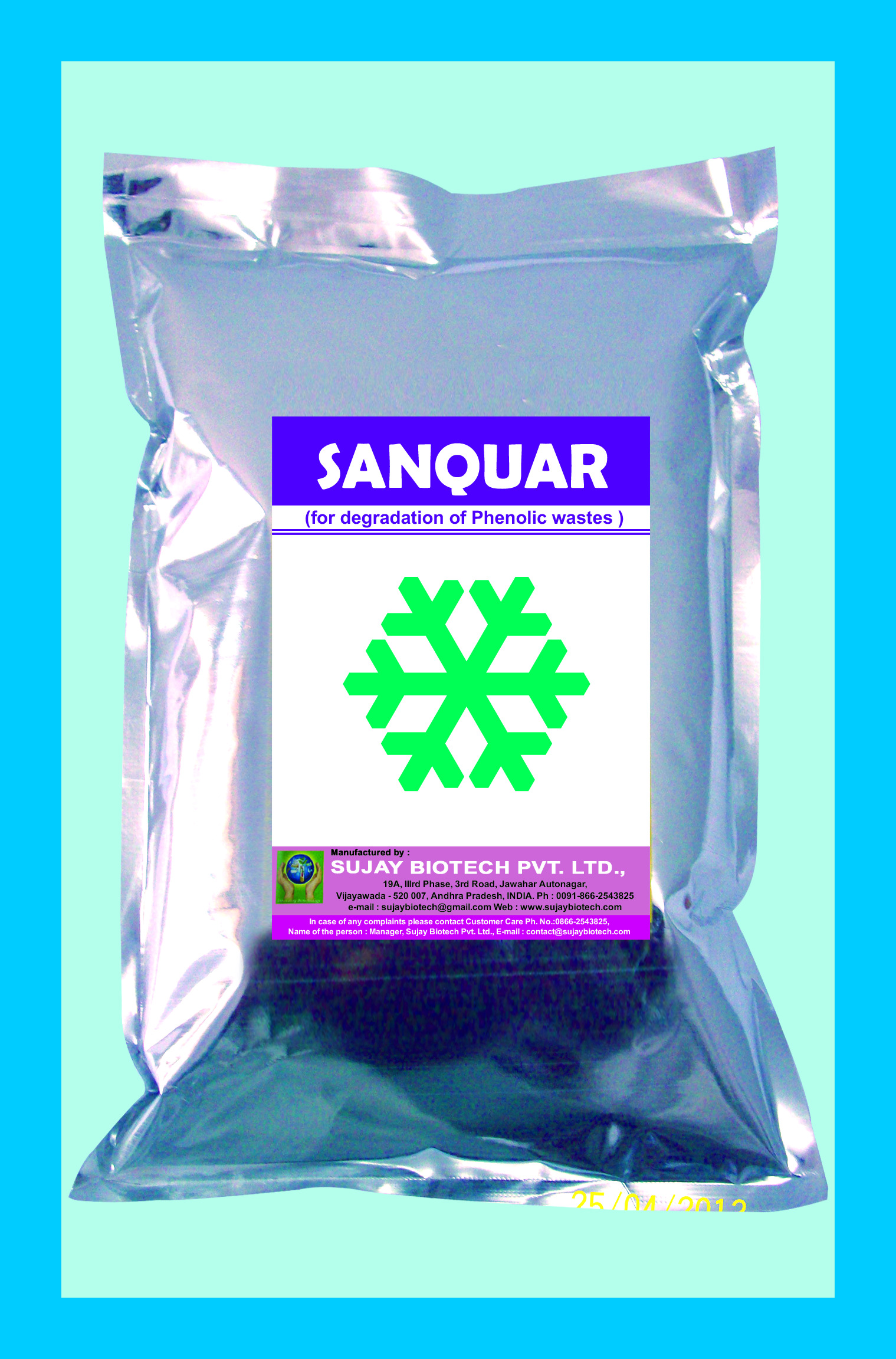
SANQUAR
Features
Hydrocarbons and Phenols are emissions and effluents of Pharmaceutical industries, Bulk drug manufacturing industries, Petrochemical industries, Waste plastics. Steel plants. Coal refineries, Pesticide manufacturing units, Wood preservatives, Paints manufacturing units.
Paper and Pulp industries, Pulp bleaching effluents, Aromatic compounds producing units etc., and render a threatening problem to the environment and the life in and around it.
The most polluting chemicals in the waste water are derived during manufacturing of Benzene, Toluene, Xylene, Methanol, Acetone, Cyclohexane, Cresol, Cresylic acid, Isobutanol, Nitrobenzene, Chloroform. Napthalene, Phenanthrene. Vinyl chlorides (Chloro ethylene) and Hexe chloroguanide etc.,
The other toxic compounds formed due to incomplete combustion of fossil fuels are CO, SO, NO, etc. and are found to be very toxic to plant and animal life.
Problems of concern:
Hazardous to environment.
Toxic to the aquatic life, causing mild to severe cutaneous and gastro intestinal inflammation and disorders.
Toxic to human and animals when exposed to even moderate concentrations.
When released into air, gives pungent and strong odor's.
Industrial and agricultural lands are contaminated, effecting the total life in the niche of ecosystem.
SUJAY BIOTECH has developed products for treating Hydrocarbon wastes and Phenolic wastes and released after intensive research. Refinement is continuing to match the tailormade requirements o various industries.
Specification
Sanquhar
Advantages:
*Breakdown of Phenols and Phenolic compounds by cleavage.
* The product can be used in contaminated effluents and also on phenol contaminated sites.
* The sludge from the treatment system can be transformed into a non- toxic product, which can be used for land filling.
Consortium: Phenol degrading bacteria. Phenol utilizing bacteria.
| Dosage | For effluents: 5 Kgs/day/100,000 Its. of stored waste water. The dosage varies widely depending upon characteristics and performance. |
| For solid wastes: Mix 2 kgs of the product (Sanquhar) in 50-100 Its. of water and sprinkle on 10 MT of waste. Further application depends on the strength of the waste and climatic conditions |